Thursday, April 21, 2022

Periodontal Disease — Stages & Tips To Avoid It


 In the United States, periodontal illness influences over portion, everything being equal. It can bring about tooth misfortune, the requirement for false teeth, and a plenty of other medical problems. Gum issues ought to be dealt with suitably paying little heed to how normal the condition is believed to be a direct result of their potential outcomes. It isn't limited by age or orientation and can influence anybody of any orientation or age.

What Is Gum Disease?

Periodontal or gum sickness is a sort of disease that endures long. It influences the gums as well as the jawbone, bringing about tooth misfortune as well as other foundational issues. At the point when plaque develops and solidifies, periodontal sickness grows, as a rule because of unfortunate brushing and flossing propensities. It contains four stages, only one of which can be switched.

Periodontal infection is by and large brought about by microscopic organisms. Assume plaque and tartar are not dispensed with routinely, the possibilities experiencing gum issues increment. Smoking is the main gamble factor, making periodontal sickness therapy less viable. Diabetes, medications that block salivation stream, legacy, hormonal changes, and explicit issues, for example, AIDS are altogether factors that raise the gamble of periodontal illness.


Know The Stages Of Gum Disease

Periodontal infection is partitioned into four phases: gum disease, slight periodontal sickness, moderate periodontal illness, and serious periodontal sickness.

Gum disease - Gingivitis is the main phase of periodontal illness that can be switched in light of the fact that it hasn't yet impacted the bones. This problem is brought about by plaque development around the teeth. There are a couple of side effects of this stage, and a large portion of them are effortless. Periodontal sickness is normal and considered perilous in light of this specific variable. Gum sickness doesn't typically show itself until the fourth and last stage. Early admonition signs incorporate awful breath, enlarging and redness of the gums, and draining while brushing or flossing. With fitting oral consideration and standard tests, gum disease can be dealt with and switched.

Slight Periodontal Disease - Mild gum illness is the second phase of periodontal sickness. It's not reversible, yet it tends to be made due. Whenever a patient arrives at stage two, the contamination has spread deep down, making it disintegrate. As the bacterium creates and turns out to be more forceful, bone misfortune increments. Basic dental cleanliness will never again do the trick. Gum enlarging or redness, terrible breath, draining while flossing or brushing, and examining profundities of four to five millimeters are normal signs.

Moderate Periodontal Disease - Periodontal illness in its third stage can't be turned around like moderate periodontal sickness. Stage three has similar attributes as stage two, however examining profundities are six to seven millimeters, permitting more microbes to hurt your bones and your circulatory system and insusceptible framework. Periodontal infection in stages two and three are treated by scaling and root planing. Scaling and root planing are profound cleaning methods that eliminate microscopic organisms stores from your gums. Assuming that left untreated, these stages can bring about bone and tooth misfortune, gum awareness, expanded dying, and tooth moving.

Progressed Periodontal Disease - When periodontal sickness arrives at its end stage, the contamination deteriorates, and the microbes return to infection causing microorganisms. You have a 50-90% likelihood of losing bone mass as of now. Red, kindled, discharge filled gums, cold awareness, expanded tooth releasing, excruciating biting, and serious halitosis are altogether side effects of cutting edge periodontal sickness, including bone misfortune. Periodontal medical procedure or periodontal laser treatment is expected to clean the profound microscopic organisms filled pockets that have framed in the mouth. Stage four periodontal illness brings about tooth dividing or holes, gum downturn, the need for false teeth, and other genuine medical conditions whenever left untreated.

Tips To Prevent Periodontal Problems

Gum sickness or periodontal issues can be forestalled with the assistance of specific measures. They are:

Keep a legitimate oral cleanliness routine - A genuine instance of periodontal sickness can show up out of the blue. Gum illness deteriorates with time; consequently, keeping up with great oral cleanliness can assist with keeping it from advancing to a hopeless level.

Regardless, plaque (a tacky layer of microbes) amasses with time in the event that you don't brush and floss everyday. The plaque will then, at that point, join with different minerals on your teeth to frame tartar, which requires teeth cleaning to dispose of. In the event that plaque and tartar aren't killed, your gums will become aggravated and bothered, prompting gum infection. Cleaning and flossing your teeth two times per day, as well as having your teeth cleaned at the dental office like clockwork, will assist you with having sound gums.


Admission of more Vitamin C is significant - One of the essential drivers of gum sickness is a L-ascorbic acid insufficiency. Increment your gum illness obstruction by eating more oranges, strawberries, and kiwis or taking L-ascorbic acid pills. L-ascorbic acid has calming impacts that can assist with stopping gum draining and expanding, which are successive signs of gum illness.

Keep a decent eating routine arrangement - An even eating routine is useful for your teeth and can likewise assist you with upgrading your general wellbeing. Avoid sweet dinners and drinks, which can cause tooth rot. Plaque microorganisms feed on starches and sugar, creating acids that can hurt your teeth and gums. Really look at the dietary data on the bundle prior to adding it to your shopping bin. Numerous dinners and refreshments named as "sound" can have a great deal of sugar in them.

Remaining hydrated is an unquestionable requirement - Did you realize that salivation would one say one is of our body's best normal enemy of plaque protections? Your body delivers more spit after a supper to wipe away food particles and plaque. Hydrate over the course of the day to keep your grin sound. Likewise, remember that a few refreshments, for example, espresso or liquor dry out as opposed to hydrate you.

Go for normal teeth cleaning meetings - Our dental hygienist will actually want to eliminate plaque and tartar from your teeth during teeth cleaning meetings. We will actually want to check for any indications of gum sickness, later on, so you can keep your grin sound.

Our dental specialist can assist you with controlling your periodontal infection regardless of whether you as of now have it. Scaling and root arranging are two methodology that can assist you with trying not to subside gums and other oral medical conditions. Plan an arrangement at My Dentist For Life assuming that you are searching for the best teeth cleaning administration in Plantation, FL, and close by.

Monday, April 4, 2022

How Painful Is All-On-4-Implants?


 Dental implants have come a long way with time. It is now considered the most popular teeth replacement option and can be afforded by almost everyone. But, people often nurture the misconception of all-on-4-implants being a very painful option to choose. Do you have a similar thought in mind? If yes then going through this blog can be of great help and also provided you with a different perspective. 

If you have multiple missing teeth, going for all-on-4-implant is a perfect option. You just need to fulfill a few criteria. We have listed them in the pointers below:

  • You need to have a healthy jawbone
  • You need to maintain a proper oral hygiene routine
  • You must avoid smoking
  • You should have healthy gums

Getting all-on-4-implants is not painful at all if performed under the observation of a trained dental professional. The process takes not more than 2 hours to get executed. 

Is the recovery process very difficult?

You need to know that recovering from the all-on-4-implants process is not difficult and might feel hassle-free if done correctly. But, adopting a few measures can make the treatment a grand success.

Maintain your oral hygiene:

Try to reduce contact with your sensitive gums after flossing or brushing. This will help to prevent disruption of surgical stitches and in turn, reduce the chances of suffering from tremendous pain. It is advisable to rinse the wounded areas with salt water to keep them clean. 

Do go for follow-up visits:

It is important to go for dental visits after the treatment. This provides your dentist with an opportunity to access the recovery rate and implant’s progress from the surgery. There are times when patients go through a little discomfort due to the jawbone may shift during its fusion with the implants. Though this cannot cause pain but needs to be resolved as early as possible. Meeting a dentist will help do so. 

Final Words

You might have now figured out that going for all-on-4-implants is not going to be painful for you. Stay assured that you might have to just face minimal discomfort. So there is nothing to worry about! Stop suffering from the problem of missing teeth and contact a dental clinic near you. You can get in touch with My Dentist for Life if you are looking for dental implants treatment in Plantation, FL. Our professionals are here to provide you with the best possible service. Call us at (954) 932 – 7273.

Friday, March 25, 2022


 One of the most important aspects of our entire facial shape is our teeth. A sincere and friendly grin is a show of genuineness and warmth. Many of us have a natural aversion to those who don’t smile. The explanation for one’s refusal to smile, on the other hand, could be as simple as the state of one’s teeth. It’s tough to feel comfortable displaying anything about which we’re self-conscious. The same is true when it comes to grins, since having a terrible set of teeth may make you reluctant to show off your pearly whites.

If this describes you, going for cosmetic dental treatments can effectively resolve the problem. As a result, here are six suggestions for finding the finest cosmetic dentist for you.

Do Ask For References

When looking for a cosmetic dentist, the first thing you should do is ask your friends, family, neighbors, or present dentist for advice. Some dental offices may not have the necessary equipment to perform certain cosmetic dental work, but they may be able to prescribe a more specialized technique for you.

Go Through Online Reviews

Once you have a dentist’s office’s name, the next step is to look for online reviews to figure out what others have to say about it. You should work with a dentist’s office that is clean, trustworthy, and professional. As a result, you’ll be able to visit one that provides the best service.

Consider Looking For Testimonials

Another area to seek insight is through patient and client testimonies. This is frequently the most dependable source of information, as these individuals are eager to share their personal experiences. You can get a better understanding of what the dental office is like and whether or not you should pay for their services by reading the reviews and comments.

Choose A Dental Office That Specializes In The Area Of Your Need

Although most cosmetic dental facilities provide similar services, not all of them specialize in the same area. For example, one dental office might have the greatest instruments and staff for tooth whitening, while another would be more equipped to handle orthodontics. As a result, you’ll need to choose one that’s right for you in order to get the finest results from the operation you want to do.

Discuss Your Insurance Policy With The Dentist

Since the costs of cosmetic dentistry can be quite exorbitant, you should double-check that your insurance policy will cover them. Furthermore, some dental practices have agreements with specific insurance carriers, thus they will not accept coverage from their competitors. You should schedule an appointment with the dentist ahead of time to avoid any problems later on.

We hope that you have now know how to find the best cosmetic dentist nearby. Book an appointment at My Dentist For Life if you are looking for the best cosmetic dentist in Plantation, FL. Give us a call to schedule a visit today! 

My Dentist For Life offers the best dental services on Plantation and our dental office is conveniently located at https://www.google.com/maps/d/u/0/viewer?ll=26.139659142478727%2C-80.2716305&z=14&mid=1ItIi5E2s9iRJJH5oaRktK9s0pygWKMeb


Tuesday, March 22, 2022

Know The Advantages Of Periodontal Therapy


 Periodontal therapy is a non-surgical or conservative gum disease treatment. Its purpose is to prevent periodontal disease from progressing to where surgery is required. It also helps restore healthy gums, which effectively enables one to avoid loss of teeth.

For minor periodontitis, this is usually the initial line of treatment. When patients have at least one tooth with 3 mm of gum attachment loss, they are considered to be in this stage of gum disease. Minor periodontitis affects about 9% of patients with periodontal disease.

Gingivitis, unlike periodontitis, is merely a gum irritation. Though, you need to know that untreated gingivitis can lead to periodontitis. Gingivitis can also be treated with periodontal therapy. In this blog, we will discuss the benefits of periodontal treatment in detail. 

What Are The Benefits Of Periodontal Therapy?

The best dentist in Plantation has come up with the advantages of periodontal therapy in the pointers below:

  • Gum disease is usually accompanied by bad breath. It is caused by a lack of good oral hygiene, which leads to the formation of plaque and tartar beneath the gum line. Periodontal therapy might help you get rid of foul breath and breathe easier.
  • Since the gums frame the contour of your teeth, they are really crucial to the appearance of your smile. Gum disease can cause your gums to bleed and swell, making it difficult to smile. Fortunately, periodontal therapy keeps your gums clean and aligned with your teeth, enhancing your smile. To add on, periodontal therapy cleans your teeth to prevent discoloration.
  • The state of your teeth and gums can reveal a lot about your general health. Your dentist can detect any potential health risks through periodontal therapy. Bacteria may enter your circulation and harm other body organs such as your kidney and liver if not treated promptly. These problems can be avoided with gum therapy.
  • Due to bleeding, infected gums can be uncomfortable, sore, and painful. It can make you feel uneasy even when cleaning or flossing your teeth, worsening your situation. These gum disease symptoms may be relieved with periodontal therapy.

Aftercare Tips To Follow After Undergoing Periodontal Therapy

You can resume your regular oral health routine after going for periodontal therapy. Every meal should be followed by flossing and brushing for at least two minutes. Eating food items high in immune boosters, such as fruits and vegetables, can also help your gums heal.

If your dentist recommends antibiotics, make sure to follow the instructions carefully. This lowers the chances of germs developing drug resistance. It’s also a great idea to visit your dentist more often than recommended (twice a year). This allows your oral healthcare practitioner to keep a closer eye on the condition of your gums and teeth.

Is Periodontal Therapy Painful?

A numbing medication will be applied to the gums and tooth roots before the treatment procedure. The local anesthetic is fast-acting and will keep you numb during the process. Scaling or planning may produce little discomfort in the case of people with a low pain threshold.

The treated area may remain numb for an hour or two after the therapy session. Once the anesthetic wears off, you may experience mild discomfort or slight tenderness. These unpleasant sensations usually fade away within a day or two.

Do not hesitate to tell your dentist if you are concerned about the pain before the treatment. Other sedative options may also be available at the dental office. While your gums heal, your dentist may prescribe pain management medications for you to take home.

At My Dentist For Life, we offer top-quality periodontal therapy in Plantation, FL. So, if you are suffering from severe gum problems, do not hesitate to get in touch with us. 

My Dentist For Life offers the best dental services on Plantation and our dental office is conveniently located at https://www.google.com/maps/d/edit?mid=1ItIi5E2s9iRJJH5oaRktK9s0pygWKMeb&ll=26.1396591424787%2C-80.2716305&z=14

Thursday, March 17, 2022

Know The Differences Between Full & Partial Dentures


 Dentures are removable, custom-made substitutes for lost teeth and the tissues around them. If you reside in Plantation, FL, or nearby and have lost one or more adult teeth, there’s no reason you should feel self-conscious every time you smile, putting a damper on your professional or social life. We can substitute your missing teeth with partial or full dentures, which will not only enhance your appearance and smile but will also enable you to eat and speak with ease.

What Problems Can Be Caused Due To Missing Teeth?

There’s more to worry about than aesthetics for anyone who loses one or more adult permanent teeth. Since your teeth are such an important part of your facial bone structure, missing teeth will cause your facial muscles to sag, giving you an older appearance. It’s common to have trouble pronouncing some words.

Furthermore, missing a tooth might make it difficult to chew certain meals, resulting in significant dietary adjustments. As the meals that are the most difficult to chew have the highest nutritious value, this can have a significant impact on one’s overall health. Apples, nuts, and whole-grain bread are among these foods. Foods that are softer and easier to chew have less nutritional value.

Lastly, your teeth are not as securely set in your jawbone as you think. Teeth on both sides of space will lean in toward direction and ultimately empty the region over time. These crooked teeth are not only more difficult to clean, but they can also impair one’s bite, which is the way the top and lower sets of teeth meet. Multiple teeth missing in a row is a good cause to consider dentures.

Know The Difference Between Full And Partial Dentures

Dentures are handcrafted in a lab using impressions of the patient’s mouth. A dentist will assess which form of denture is best for the case based on how many teeth the patient has lost. Someone who is missing numerous teeth in a row but has generally good oral health is a perfect candidate. Full dentures may be the best option for someone who is missing most or all of their teeth along the dental arch. A partial denture, on the other hand, may be the best option if the patient is missing only a few teeth.

A full set of dentures contains a flesh-colored plastic or acrylic basis that is precisely shaped to fit securely and comfortably on the gums. The palate, or roof of the mouth, is covered by the upper set. Dentures are held in place by a thin layer of saliva that forms a seal between the denture and the gums, which is why a dry mouth can cause dentures to loosen. Because there must be enough room for the tongue, the bottom set is horseshoe-shaped and held in place by the cheek and tongue muscles.

A partial denture is a plate with one or more artificial teeth attached to it. A dental bridge, on the other hand, can be a good option if a patient’s natural teeth are sufficient and robust. Bridges are used to bridge the space between two teeth. A dentist can use crowns on each side of the gap to secure an artificial tooth. However, if the original teeth are not in good enough condition, a dental practitioner can attach the prosthetic tooth to a jaw implant. While it’s true that dentures take some getting used to and will never feel exactly like your real teeth, today’s dentures are significantly more natural-looking and pleasant than dentures from even a decade ago.

Final Words

Here at My Dentist For Life, we offer top-quality full and partial dentures in Plantation, FL. Hence, if you are facing problems related to one or multiple missing teeth, book an appointment at our dental office without any hesitation. 

Wednesday, March 2, 2022

8 Common Questions On Dental Implants


The dental implant is one of the best tooth replacement choices in today’s time. Dentures and bridges were the only options for persons who had lost their teeth before implants were developed. Dental implant procedures are perfect for replacing teeth that have been lost due to accident or decay, and they provide a long-term solution for improving your appearance. They have the same appearance and feel like your natural teeth, giving you the enticing smile you’ve always wanted. In this blog, we are going to provide an answer to common queries related to dental implants treatment.

What Is A Dental Implant?

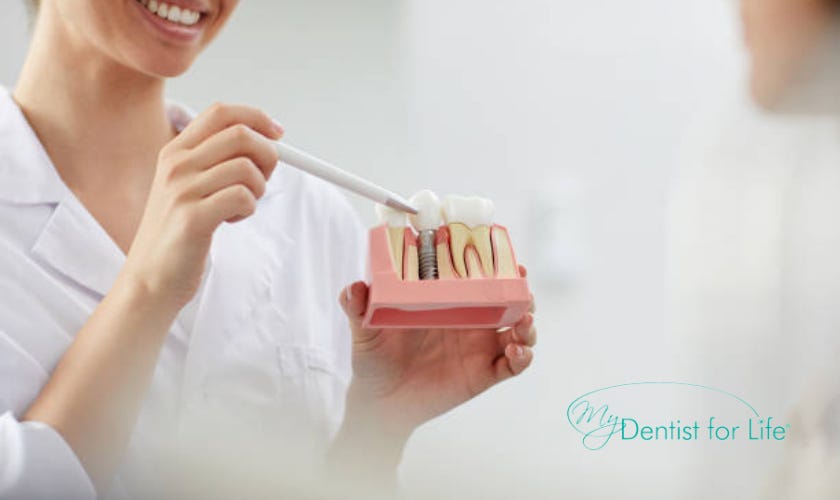
A dental implant is a replacement tooth root that is surgically placed into the jawbone to support a denture, bridge, or another prosthetic tooth. People who have lost a tooth or teeth due to decay, periodontal disease, an injury, a failed root canal, or root resorption may be candidates for dental implants.

Is It Necessary To Replace A Missing Tooth?

American Dental Association says that there are numerous reasons to keep a missing tooth’s space. A large gap between teeth might hinder a person’s ability to speak and chew. Adjacent teeth become free-range and can migrate or shift, and bone loss around a missing tooth might occur in some circumstances.

How Does Dental Implants Work?

Dental implants are usually constructed of titanium, which is a biocompatible substance that serves as a solid foundation (tooth root) for replacement teeth. The natural bone grows around the implant and fuses it into place, securing it in place.

Is The Dental Implant Process Safe?

The dental implant procedure is one of the safest operations in dentistry, and it is the only technique of tooth replacement that stimulates natural bone growth beneath the missing tooth.

How Many Visits Are Necessary for Dental Implant Treatment?

Every case is distinct, and every patient heals in their way. A dentist can give you an estimate of how much time you’ll spend in the chair.

Is The Placement Of Dental Implants Painful?

The majority of people can be sedated completely, partly, or numbed with anesthesia. The goal is to cause as little pain as possible. Dental lasers can also help in the placement of implants. Lasers provide cutting-edge techniques for implant placement that are both successful and comfortable for the patient.

How Much Time Do Implants Need To Heal?

The integration of dental implants can take anywhere from two to several months. The bone that surrounds a new implant must recover before it can hold the implant in place.

How Much Do Dental Implants Cost?

It is important to note that the cost of all implants is not the same and varies depending on the needs. As a result, the money you must pay may differ from the money that must be paid by another individual. Aside from that, there are a number of other factors that influence the price of dental implants. They include things like the cost of living in the location where the dental clinic is located, the dentist’s costs, the difficulty of the problem, the goods used in the task, and so on. The cost of a single dental implant ranges from $1500 to $2000 or more on average. Patients may require many dental implants to complete the procedure. If this is the case for you, the price will rise as a result.

There are a few additional fees associated with receiving dental implants that you should be aware of.

  • The sum of money required to purchase the crown
  • The price of the abutment
  • The money spent on booking dental appointments

When all of these charges are included, the overall cost of a dental implant is roughly $3000 — $4800 or more. However, there is no need to be concerned since we can tell you that every cent spent on dental implants is well spent. Apart from that, most dental insurances pay the majority of the cost of dental implants.

In case you are suffering from problems related to missing teeth, book an appointment at My Dentist For Life. We offer excellent dental implant services at an affordable price range in Plantation, FL. Our dental office in Plantation is conveniently located at https://www.google.com/maps/d/edit?mid=1ItIi5E2s9iRJJH5oaRktK9s0pygWKMeb&ll=26.1396591424787%2C-80.2716305&z=14

Thursday, February 24, 2022

When Should You Consult A Pediatric Dentist?


You would go to any length as a parent to protect your child’s health. One of the best ways to protect your child’s health is to prioritize basic oral hygiene. While many of these tasks can be completed at home under your supervision, seeing a pediatric dentist is always a must. The primary reason being some aspects of dental maintenance and treatment is impossible to recreate on your own. Moreover, oral problems account for 51 million school hours lost each year. You may be able to teach your child how to properly brush and floss their teeth, but they will need the supervision and guidance of a pediatric dentist. 

If you’ve been procrastinating the task of finding a pediatric dentist in your area or rescheduling appointments due to other commitments, you may be unknowingly jeopardizing your kid’s oral health. We have provided the five signs when you should see a pediatric dentist right away to avoid more trouble.

It Is Important To See A Kids’ Dentist If:

  • Your child is in excruciating pain due to dental problems – While minor discomfort might be overlooked, severe or chronic tooth pain should be handled immediately. Dental decay, a damaged tooth, or other underlying issues could be the source of this pain. Even if your child’s pain goes away, it’s critical to figure out what’s causing it and talk to your pediatric dentist about the issue.
  • If your kid’s teeth are stained or discolored – Whether your child still has all of their baby teeth or has been visited by the Tooth Fairy, tooth discoloration isn’t natural. If kids develop white patches on their teeth, it could be a sign of dental cavities or tooth decay. Teeth that have turned grey, brown, or even black require immediate professional attention. Time is crucial since degradation can occur quickly.
  • In case your child is suffering from teeth sensitivity – Adults experiencing tooth sensitivity might not think it’s serious enough to book an appointment at a dental office. Oral sensitivity in toddlers, on the other hand, often suggests the development of cavities – particularly if your child has difficulties eating hot or cold foods. Don’t ignore this issue because their sensitivity (and cavities) may worsen.
  • If your kid has inflamed gums and suffers from gum bleeding – Gums that are swollen or bleeding are generally signs of disease or infection. Although you may feel that gingivitis is solely a problem for adults, it can also affect children. Plaque buildup in your child’s mouth can lead to gum irritation and the eventual loss of permanent teeth. Dental decay can also result in the formation of an abscess on the gums, which is extremely painful. Contact your child’s dentist right away if you notice any irritation or persistent bleeding in this area.
  • If your one-year-old child has not visited a dentist yet – An oral health problem may not necessarily require a visit to a pediatric dentist. If your kid hasn’t seen a dentist since his/her first birthday, this is one of the most serious signs that should be investigated. Children should see a dentist by their first birthday or within six months after the eruption of their first tooth, according to the American Academy of Pediatric Dentistry (whichever comes sooner). If your child has reached certain developmental milestones, he/she is due for a pediatric dental examination.

We hope that you now know the exact signs that tell you to visit a pediatric dentist. If you are looking for the best children’s dental care in Plantation and the surrounding, book an appointment at My Dentist For Life. 

Sedation Dentistry Plantation: A Comfortable Approach to Stress-Free Dental Care

 Dental anxiety is more common than many people realize. From mild nervousness to severe fear, these feelings can prevent individuals from s...