Showing posts with label Cosmetic Dentist Plantation. Show all posts

Monday, July 22, 2024

What is the Most Common Complication After Tooth Extraction?


Tooth extraction is a common dental procedure, often necessary to resolve issues like severe decay, infections, or overcrowding. However, like any surgical procedure, it comes with potential complications. The most common complication after tooth extraction is dry socket, a painful condition that can significantly impact your recovery.

Understanding Dry Socket

Dry socket, or alveolar osteitis, occurs when the blood clot at the site of the tooth extraction fails to develop, dislodges, or dissolves before the wound has healed. This leaves the underlying bone and nerves exposed, leading to severe pain and delayed healing.

Causes of Dry Socket

  • Poor Oral Hygiene: Not keeping the extraction site clean.
  • Smoking: Chemicals in cigarettes can prevent clot formation.
  • Trauma: Dislodging the clot through vigorous rinsing or sucking actions.
  • Infections: Pre-existing infections can increase the risk.

Recognizing Complications After Tooth Extraction

It's essential to know when something is wrong after a tooth extraction to seek timely intervention. Recognizing the signs of complications can prevent more severe issues.

Signs of Dry Socket

  • Severe Pain: Intense pain that radiates to your ear, eye, temple, or neck.
  • Empty Socket: Visible bone within the extraction site.
  • Bad Breath: Unpleasant odor or taste in your mouth.

Other Potential Complications

  • Infection: Redness, swelling, and pus at the extraction site.
  • Prolonged Bleeding: Bleeding that doesn’t stop after a few hours.
  • Nerve Injury: Numbness or tingling in the lips, tongue, or chin.

Normal Symptoms After Tooth Extraction

Not all post-extraction symptoms are cause for concern. Some discomfort and swelling are normal parts of the healing process.

Expected Symptoms

  • Swelling: Typically peaks around 48 hours post-extraction.
  • Mild Pain: Manageable with over-the-counter pain relievers.
  • Bruising: Can appear around the extraction area and on the face.
  • Slight Bleeding: Light bleeding or oozing for the first 24 hours.

Speeding Up the Healing Process

Proper care can significantly impact how quickly and comfortably you recover from a tooth extraction. Here are some tips to promote faster healing.

Tips for Faster Healing

  • Follow Your Dentist’s Instructions: Adhering to care guidelines is crucial.
  • Keep the Area Clean: Rinse gently with salt water after 24 hours.
  • Avoid Straws and Smoking: Prevents dislodging the blood clot.
  • Eat Soft Foods: Stick to a soft diet to avoid irritating the extraction site.
  • Rest and Hydrate: Give your body the energy it needs to heal.

Choosing My Dentist For Life of Plantation for Tooth Extractions

If you're considering Tooth Extractions in Plantation, We at My Dentist For Life of Plantation offers expert care to ensure a smooth and safe experience.

Why Choose Us?

  • Experienced Dentists: Skilled in handling complex extractions.
  • Comprehensive Care: From extraction to aftercare, we guide you through every step.
  • Patient-Centered Approach: Personalized care tailored to your needs.
  • State-of-the-Art Facility: Advanced technology for optimal outcomes.

Final Thoughts

While dry socket is the most common complication after tooth extraction, understanding the risks and taking preventive measures can help you avoid it. Recognizing the signs of complications and knowing what normal symptoms to expect will aid in your recovery process. At My Dentist For Life of Plantation, we are committed to providing exceptional care for Tooth Extractions Plantation, ensuring your comfort and health every step of the way.

Your Path to a Healthy Smile

Embark on your journey to a healthier smile with confidence. Whether you need an extraction or any other dental service, trust the experienced team at My Dentist For Life of Plantation to provide the best care possible. Schedule your consultation today and take the first step toward optimal oral health!

Friday, July 5, 2024

How to Fix a Cavity in a Wisdom Tooth?


Wisdom teeth, also known as third molars, often present a unique set of challenges in dental health. Emerging in late adolescence or early adulthood, these teeth can be prone to various issues, including cavities. "How to fix a cavity in a wisdom tooth?" is a question many patients and dental professionals frequently encounter. Due to their position in the mouth, wisdom teeth can be more susceptible to cavities than other teeth. This blog will explore why cavities form in wisdom teeth, how they can be treated at home, and the professional interventions available to address this common dental problem. We will also discuss the preventive measures that can help maintain the health of your wisdom teeth and the overall integrity of your smile.

How to Fix a Cavity in a Wisdom Tooth?

Cavities in wisdom teeth can pose a significant challenge due to the teeth's location and limited accessibility for proper cleaning. Here’s a comprehensive guide to addressing this issue:

Professional Dental Treatments

Dental Fillings: For small to moderate cavities, a dentist may opt for a filling. This involves removing the decayed portion of the tooth and filling it with a composite resin or amalgam. This procedure restores the tooth’s functionality and prevents further decay.

Composite Resins: These are tooth-colored materials that blend seamlessly with the natural tooth. They are a popular choice due to their aesthetic appeal.

Amalgams: These are durable, silver-colored fillings that are often used for back teeth where the force of chewing is greatest.

Crowns: If the cavity is extensive and a significant portion of the tooth is compromised, a crown might be necessary. A crown covers and protects the tooth, preserving its structure and function.

Root Canal Treatment: When decay reaches the tooth's pulp, causing infection, a root canal may be required. This procedure involves removing the infected pulp, cleaning the tooth's interior, and sealing it to prevent further infection.

Tooth Extraction: In cases where the cavity is too severe or if the wisdom tooth is impacted, extraction may be the best option. Removing the tooth can prevent the spread of decay and infection to surrounding teeth and tissues.

Dental Technology and Innovations

Advancements in dental technology have improved the accuracy and effectiveness of cavity treatments:

Digital X-rays: Provide detailed images of the tooth structure, aiding in the precise diagnosis and treatment planning.

Laser Dentistry: Offers a minimally invasive option for removing decay and preparing the tooth for a filling.

Is a Cavity in a Wisdom Tooth Normal?

Cavities in wisdom teeth are relatively common, and several factors contribute to their prevalence:

Anatomical Position

Wisdom teeth are located at the back of the mouth, making them harder to clean effectively. Their position often leads to difficulties in brushing and flossing, which can result in plaque buildup and subsequent cavities.

Delayed Eruption

Wisdom teeth often erupt later than other teeth, and their emergence can be problematic. Partial eruption can create pockets where food and bacteria accumulate, increasing the risk of cavities.

Impaction

Impacted wisdom teeth, which are trapped beneath the gum or against other teeth, are particularly susceptible to decay. Impacted teeth are challenging to clean, and their irregular positioning can create areas where bacteria thrive.

Diet and Oral Hygiene

Dietary habits, particularly high sugar intake, can accelerate the formation of cavities in wisdom teeth. Inadequate oral hygiene practices, combined with the difficulties in accessing wisdom teeth, exacerbate the risk.

Statistics and Research

According to a study published in the Journal of the American Dental Association, about 10-25% of adults experience caries in their wisdom teeth .

The National Institutes of Health (NIH) reports that the prevalence of cavities in wisdom teeth is higher in individuals who have not had their wisdom teeth removed compared to those who have .

How to Treat a Wisdom Tooth Cavity at Home?

While professional treatment is essential for severe cavities, some home remedies can help manage early-stage cavities or provide relief until a dental visit:

Rinsing with Salt Water

A salt water rinse can help reduce inflammation and kill bacteria. Mix half a teaspoon of salt in a cup of warm water and rinse your mouth thoroughly. This can be done several times a day to maintain oral hygiene and reduce discomfort.

Clove Oil Application

Clove oil has natural analgesic and antibacterial properties. Applying a small amount of clove oil to the affected tooth can help alleviate pain and reduce bacterial growth.

Hydrogen Peroxide Rinse

Diluted hydrogen peroxide can help kill bacteria and cleanse the mouth. Mix equal parts of hydrogen peroxide and water, and use it as a mouthwash. However, it’s crucial not to swallow the solution and to rinse thoroughly with water afterward.

Over-the-Counter Pain Relievers

For temporary relief from pain and discomfort, over-the-counter pain medications such as ibuprofen or acetaminophen can be effective. These medications can help reduce inflammation and manage pain until you can see a dentist.

Avoid Sugary and Acidic Foods

Limiting the intake of sugary and acidic foods can help slow down the progression of cavities. These foods can exacerbate tooth decay by creating an acidic environment that erodes enamel.

Proper Oral Hygiene

Brushing twice daily with fluoride toothpaste and flossing can help manage early-stage cavities. Using an antiseptic mouthwash can further reduce bacterial growth and maintain oral hygiene.

Cavity-Prevention Products

Using products designed to prevent cavities, such as fluoride mouth rinses and toothpaste, can help strengthen tooth enamel and reduce the risk of decay.

DIY Remedies: Effectiveness and Cautions

Coconut Oil Pulling: Swishing coconut oil in the mouth (oil pulling) is believed to reduce bacteria, but evidence supporting its effectiveness for cavity treatment is limited .

Baking Soda: Brushing with baking soda can neutralize acids in the mouth, though it should not replace regular toothpaste as it lacks fluoride.

How to Clean a Wisdom Tooth Cavity?

Proper cleaning of a wisdom tooth cavity involves both routine oral hygiene practices and targeted measures to address the cavity:

Regular Brushing and Flossing

Technique: Use a soft-bristled toothbrush to clean all surfaces of the teeth, including the wisdom teeth. Position the brush at a 45-degree angle to the gums and use gentle, circular motions.

Frequency: Brush at least twice a day and floss daily to remove food particles and plaque from between the teeth and along the gumline.

Interdental Brushes and Water Flossers

Interdental Brushes: These small brushes are designed to clean between teeth and can be particularly useful for reaching the areas around wisdom teeth.

Water Flossers: These devices use a stream of water to remove plaque and debris from between teeth and around the gumline. They can be beneficial for cleaning hard-to-reach areas, such as the wisdom teeth.

Antibacterial Mouthwash

Using an antibacterial mouthwash can help reduce bacteria in the mouth and prevent infection. Look for mouthwashes that contain chlorhexidine or essential oils, which have proven antibacterial properties.

Professional Cleanings

Regular dental cleanings are crucial for maintaining oral health and preventing cavities. A dentist or hygienist can remove plaque and tartar buildup that is difficult to reach with regular brushing and flossing.

Fluoride Treatments

Professional fluoride treatments can help strengthen tooth enamel and make it more resistant to decay. These treatments are typically applied during routine dental visits and can provide added protection against cavities.

Chewing Sugar-Free Gum

Chewing sugar-free gum, especially those containing xylitol, can help stimulate saliva production and neutralize acids in the mouth. This can aid in preventing the formation of cavities by maintaining a healthier oral environment.

Dietary Adjustments

Adopting a diet low in sugar and high in fiber can help reduce the risk of cavities. Foods rich in calcium and phosphates can help strengthen tooth enamel and promote oral health.

How Does a Wisdom Tooth Cavity Heal?

Healing a wisdom tooth cavity depends on the stage of decay and the treatment administered:

Initial Stage: Remineralization

Fluoride: Fluoride can help remineralize early-stage cavities by repairing damaged enamel and preventing further decay.

Diet: A diet rich in minerals like calcium and phosphate can support the remineralization process.

Intermediate Stage: Professional Intervention

Fillings: When a cavity progresses beyond the initial stage, a filling is often required to restore the tooth’s integrity.

Inlays and Onlays: For larger cavities, inlays and onlays made from porcelain or composite materials can provide a more extensive restoration.

Advanced Stage: Restorative Treatments

Crowns: In cases of significant decay, a crown may be necessary to cover and protect the tooth.

Root Canal Therapy: If the decay reaches the pulp, a root canal may be required to remove the infection and preserve the tooth.

Healing Process Post-Treatment

Recovery: After treatment, it’s essential to follow post-care instructions to ensure proper healing. This includes maintaining good oral hygiene, avoiding hard or sticky foods, and attending follow-up appointments.

Pain Management: Over-the-counter pain relievers and ice packs can help manage discomfort after treatment. Following a soft diet can also aid in recovery.

Long-Term Prevention

Regular Dental Visits: Routine check-ups and cleanings are crucial for monitoring and maintaining the health of your wisdom teeth.

Oral Hygiene Practices: Consistent brushing, flossing, and the use of mouthwash can help prevent future cavities and maintain overall oral health.

Conclusion

Cavities in wisdom teeth are a common issue that requires careful attention and management. Understanding "how to fix a cavity in a wisdom tooth?" involves a combination of professional treatments, home care strategies, and preventive measures. Early detection and intervention are key to preventing the progression of cavities and maintaining the health of your wisdom teeth. By following the guidelines outlined in this blog, you can effectively address cavities in your wisdom teeth and ensure a healthier, more resilient smile. Regular dental check-ups, proper oral hygiene, and a proactive approach to dental care are essential components in the battle against wisdom tooth cavities.


Monday, April 4, 2022

How Painful Is All-On-4-Implants?


 Dental implants have come a long way with time. It is now considered the most popular teeth replacement option and can be afforded by almost everyone. But, people often nurture the misconception of all-on-4-implants being a very painful option to choose. Do you have a similar thought in mind? If yes then going through this blog can be of great help and also provided you with a different perspective. 

If you have multiple missing teeth, going for all-on-4-implant is a perfect option. You just need to fulfill a few criteria. We have listed them in the pointers below:

  • You need to have a healthy jawbone
  • You need to maintain a proper oral hygiene routine
  • You must avoid smoking
  • You should have healthy gums

Getting all-on-4-implants is not painful at all if performed under the observation of a trained dental professional. The process takes not more than 2 hours to get executed. 

Is the recovery process very difficult?

You need to know that recovering from the all-on-4-implants process is not difficult and might feel hassle-free if done correctly. But, adopting a few measures can make the treatment a grand success.

Maintain your oral hygiene:

Try to reduce contact with your sensitive gums after flossing or brushing. This will help to prevent disruption of surgical stitches and in turn, reduce the chances of suffering from tremendous pain. It is advisable to rinse the wounded areas with salt water to keep them clean. 

Do go for follow-up visits:

It is important to go for dental visits after the treatment. This provides your dentist with an opportunity to access the recovery rate and implant’s progress from the surgery. There are times when patients go through a little discomfort due to the jawbone may shift during its fusion with the implants. Though this cannot cause pain but needs to be resolved as early as possible. Meeting a dentist will help do so. 

Final Words

You might have now figured out that going for all-on-4-implants is not going to be painful for you. Stay assured that you might have to just face minimal discomfort. So there is nothing to worry about! Stop suffering from the problem of missing teeth and contact a dental clinic near you. You can get in touch with My Dentist for Life if you are looking for dental implants treatment in Plantation, FL. Our professionals are here to provide you with the best possible service. Call us at (954) 932 – 7273.

Friday, March 25, 2022


 One of the most important aspects of our entire facial shape is our teeth. A sincere and friendly grin is a show of genuineness and warmth. Many of us have a natural aversion to those who don’t smile. The explanation for one’s refusal to smile, on the other hand, could be as simple as the state of one’s teeth. It’s tough to feel comfortable displaying anything about which we’re self-conscious. The same is true when it comes to grins, since having a terrible set of teeth may make you reluctant to show off your pearly whites.

If this describes you, going for cosmetic dental treatments can effectively resolve the problem. As a result, here are six suggestions for finding the finest cosmetic dentist for you.

Do Ask For References

When looking for a cosmetic dentist, the first thing you should do is ask your friends, family, neighbors, or present dentist for advice. Some dental offices may not have the necessary equipment to perform certain cosmetic dental work, but they may be able to prescribe a more specialized technique for you.

Go Through Online Reviews

Once you have a dentist’s office’s name, the next step is to look for online reviews to figure out what others have to say about it. You should work with a dentist’s office that is clean, trustworthy, and professional. As a result, you’ll be able to visit one that provides the best service.

Consider Looking For Testimonials

Another area to seek insight is through patient and client testimonies. This is frequently the most dependable source of information, as these individuals are eager to share their personal experiences. You can get a better understanding of what the dental office is like and whether or not you should pay for their services by reading the reviews and comments.

Choose A Dental Office That Specializes In The Area Of Your Need

Although most cosmetic dental facilities provide similar services, not all of them specialize in the same area. For example, one dental office might have the greatest instruments and staff for tooth whitening, while another would be more equipped to handle orthodontics. As a result, you’ll need to choose one that’s right for you in order to get the finest results from the operation you want to do.

Discuss Your Insurance Policy With The Dentist

Since the costs of cosmetic dentistry can be quite exorbitant, you should double-check that your insurance policy will cover them. Furthermore, some dental practices have agreements with specific insurance carriers, thus they will not accept coverage from their competitors. You should schedule an appointment with the dentist ahead of time to avoid any problems later on.

We hope that you have now know how to find the best cosmetic dentist nearby. Book an appointment at My Dentist For Life if you are looking for the best cosmetic dentist in Plantation, FL. Give us a call to schedule a visit today! 

My Dentist For Life offers the best dental services on Plantation and our dental office is conveniently located at https://www.google.com/maps/d/u/0/viewer?ll=26.139659142478727%2C-80.2716305&z=14&mid=1ItIi5E2s9iRJJH5oaRktK9s0pygWKMeb


Thursday, March 17, 2022

Know The Differences Between Full & Partial Dentures


 Dentures are removable, custom-made substitutes for lost teeth and the tissues around them. If you reside in Plantation, FL, or nearby and have lost one or more adult teeth, there’s no reason you should feel self-conscious every time you smile, putting a damper on your professional or social life. We can substitute your missing teeth with partial or full dentures, which will not only enhance your appearance and smile but will also enable you to eat and speak with ease.

What Problems Can Be Caused Due To Missing Teeth?

There’s more to worry about than aesthetics for anyone who loses one or more adult permanent teeth. Since your teeth are such an important part of your facial bone structure, missing teeth will cause your facial muscles to sag, giving you an older appearance. It’s common to have trouble pronouncing some words.

Furthermore, missing a tooth might make it difficult to chew certain meals, resulting in significant dietary adjustments. As the meals that are the most difficult to chew have the highest nutritious value, this can have a significant impact on one’s overall health. Apples, nuts, and whole-grain bread are among these foods. Foods that are softer and easier to chew have less nutritional value.

Lastly, your teeth are not as securely set in your jawbone as you think. Teeth on both sides of space will lean in toward direction and ultimately empty the region over time. These crooked teeth are not only more difficult to clean, but they can also impair one’s bite, which is the way the top and lower sets of teeth meet. Multiple teeth missing in a row is a good cause to consider dentures.

Know The Difference Between Full And Partial Dentures

Dentures are handcrafted in a lab using impressions of the patient’s mouth. A dentist will assess which form of denture is best for the case based on how many teeth the patient has lost. Someone who is missing numerous teeth in a row but has generally good oral health is a perfect candidate. Full dentures may be the best option for someone who is missing most or all of their teeth along the dental arch. A partial denture, on the other hand, may be the best option if the patient is missing only a few teeth.

A full set of dentures contains a flesh-colored plastic or acrylic basis that is precisely shaped to fit securely and comfortably on the gums. The palate, or roof of the mouth, is covered by the upper set. Dentures are held in place by a thin layer of saliva that forms a seal between the denture and the gums, which is why a dry mouth can cause dentures to loosen. Because there must be enough room for the tongue, the bottom set is horseshoe-shaped and held in place by the cheek and tongue muscles.

A partial denture is a plate with one or more artificial teeth attached to it. A dental bridge, on the other hand, can be a good option if a patient’s natural teeth are sufficient and robust. Bridges are used to bridge the space between two teeth. A dentist can use crowns on each side of the gap to secure an artificial tooth. However, if the original teeth are not in good enough condition, a dental practitioner can attach the prosthetic tooth to a jaw implant. While it’s true that dentures take some getting used to and will never feel exactly like your real teeth, today’s dentures are significantly more natural-looking and pleasant than dentures from even a decade ago.

Final Words

Here at My Dentist For Life, we offer top-quality full and partial dentures in Plantation, FL. Hence, if you are facing problems related to one or multiple missing teeth, book an appointment at our dental office without any hesitation. 

Wednesday, March 2, 2022

8 Common Questions On Dental Implants


The dental implant is one of the best tooth replacement choices in today’s time. Dentures and bridges were the only options for persons who had lost their teeth before implants were developed. Dental implant procedures are perfect for replacing teeth that have been lost due to accident or decay, and they provide a long-term solution for improving your appearance. They have the same appearance and feel like your natural teeth, giving you the enticing smile you’ve always wanted. In this blog, we are going to provide an answer to common queries related to dental implants treatment.

What Is A Dental Implant?

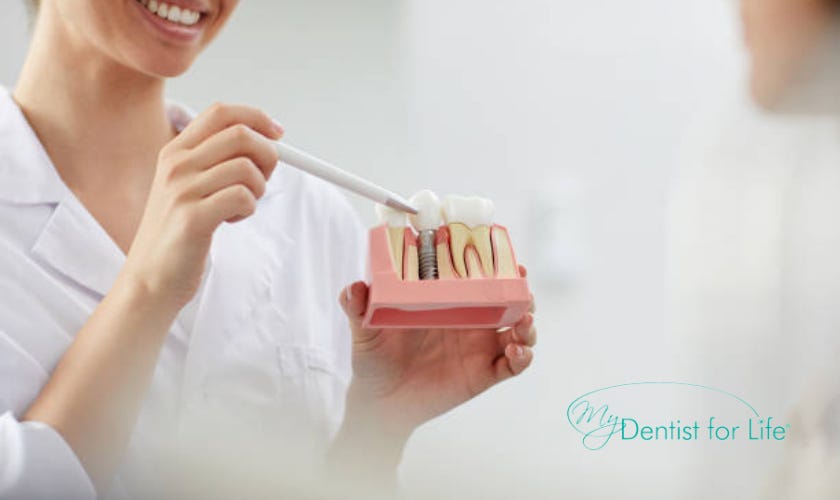
A dental implant is a replacement tooth root that is surgically placed into the jawbone to support a denture, bridge, or another prosthetic tooth. People who have lost a tooth or teeth due to decay, periodontal disease, an injury, a failed root canal, or root resorption may be candidates for dental implants.

Is It Necessary To Replace A Missing Tooth?

American Dental Association says that there are numerous reasons to keep a missing tooth’s space. A large gap between teeth might hinder a person’s ability to speak and chew. Adjacent teeth become free-range and can migrate or shift, and bone loss around a missing tooth might occur in some circumstances.

How Does Dental Implants Work?

Dental implants are usually constructed of titanium, which is a biocompatible substance that serves as a solid foundation (tooth root) for replacement teeth. The natural bone grows around the implant and fuses it into place, securing it in place.

Is The Dental Implant Process Safe?

The dental implant procedure is one of the safest operations in dentistry, and it is the only technique of tooth replacement that stimulates natural bone growth beneath the missing tooth.

How Many Visits Are Necessary for Dental Implant Treatment?

Every case is distinct, and every patient heals in their way. A dentist can give you an estimate of how much time you’ll spend in the chair.

Is The Placement Of Dental Implants Painful?

The majority of people can be sedated completely, partly, or numbed with anesthesia. The goal is to cause as little pain as possible. Dental lasers can also help in the placement of implants. Lasers provide cutting-edge techniques for implant placement that are both successful and comfortable for the patient.

How Much Time Do Implants Need To Heal?

The integration of dental implants can take anywhere from two to several months. The bone that surrounds a new implant must recover before it can hold the implant in place.

How Much Do Dental Implants Cost?

It is important to note that the cost of all implants is not the same and varies depending on the needs. As a result, the money you must pay may differ from the money that must be paid by another individual. Aside from that, there are a number of other factors that influence the price of dental implants. They include things like the cost of living in the location where the dental clinic is located, the dentist’s costs, the difficulty of the problem, the goods used in the task, and so on. The cost of a single dental implant ranges from $1500 to $2000 or more on average. Patients may require many dental implants to complete the procedure. If this is the case for you, the price will rise as a result.

There are a few additional fees associated with receiving dental implants that you should be aware of.

  • The sum of money required to purchase the crown
  • The price of the abutment
  • The money spent on booking dental appointments

When all of these charges are included, the overall cost of a dental implant is roughly $3000 — $4800 or more. However, there is no need to be concerned since we can tell you that every cent spent on dental implants is well spent. Apart from that, most dental insurances pay the majority of the cost of dental implants.

In case you are suffering from problems related to missing teeth, book an appointment at My Dentist For Life. We offer excellent dental implant services at an affordable price range in Plantation, FL. Our dental office in Plantation is conveniently located at https://www.google.com/maps/d/edit?mid=1ItIi5E2s9iRJJH5oaRktK9s0pygWKMeb&ll=26.1396591424787%2C-80.2716305&z=14

Sedation Dentistry Plantation: A Comfortable Approach to Stress-Free Dental Care

 Dental anxiety is more common than many people realize. From mild nervousness to severe fear, these feelings can prevent individuals from s...